vendly design
introduction
Vendly is a decentralized platform that enables small and medium-sized businesses to sell products and access financing without restrictions. It is a social commerce platform that allows sellers to start selling and earning money online within two minutes.
The primary objective of this project is to provide an easy and convenient shopping and selling experience online. Vendly makes it simple for sellers to create and share products quickly and efficiently on the web
role
product designer
User research, Competitor research, user persona, information architecture, user flows, wire frames, prototyping, visual design, testing
duration
User research, Competitor research, user persona, information architecture, user flows, wire frames, prototyping, visual design, testing
Tools used
User research, Competitor research, user persona, information architecture, user flows, wire frames, prototyping, visual design, testing
problem statement
One of the biggest challenges faced by online vendors is effectively reaching and engaging their target audience, retaining customers, and managing their presence on various social media platforms. This can be a complex and time-consuming task that requires careful planning and execution.
background
As the only designer on the team, which also included one UX writer and four engineers, I was in charge of conducting user research and creating the visual design for the platform. Although the hackathon was brief, we were able to accomplish several key achievements, including:
- We used design sprints as a way to guide and inform our process: Through the use of design sprints, I was able to successfully identify the problem at hand, generate ideas for solutions, create prototypes, and ultimately produce the final product.
- Implemented a design process for the project: By implementing a design process, our team was able to establish more structure in how we approach our work and allow other teams to have visibility into our upcoming sprints. This has been beneficial in helping us to be more organized and efficient.
- Creating a design system: Having a design system in place helps to ensure that the overall visual identity and user experience remains consistent throughout the platform.
- End to end execution: The speed at which the engineers were able to turn the designs into code showed our efficiency and ability to work together as a team to deliver new features.∏
the process
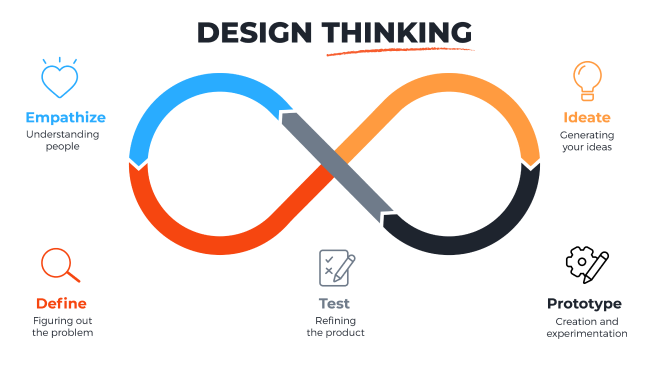
Our design process for vendly is based on the ‘Design thinking process’. We aim to incorporate the key phases of Product definition, Research, Analysis, design, and validation in our project.
understanding the problem
The Design Thinking process is a structured approach to problem-solving that involves empathy, ideation, prototyping, and testing. By conducting interviews with five online vendors, I was able to gather valuable insights into their pain points. Through this process, I was able to understand their needs and problems in greater detail, which helped to design solutions that are tailored to their specific needs.
goals of the research
- To identify the difficulties and issues faced by online vendors.
- To determine the types of businesses owned by online vendors and those that are more successful in an online setting.
- To understand the online platforms currently being used by online vendors for their business.
- To learn about the techniques and approaches used by online vendors to manage their businesses and financial accounts online.
- To determine whether online vendors use sponsored advertisements to increase visibility and drive traffic to their businesses.
We conducted an online survey and received responses from 96 vendors and 52 buyers who have been actively engaged in online buying and selling for the past six months, based on which we analyzed the results.
analyzing the problem
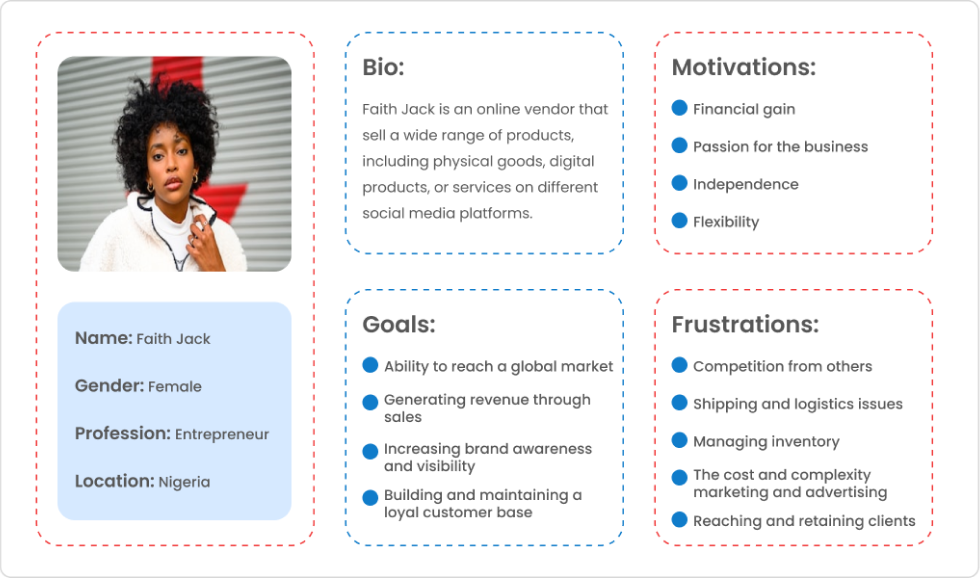
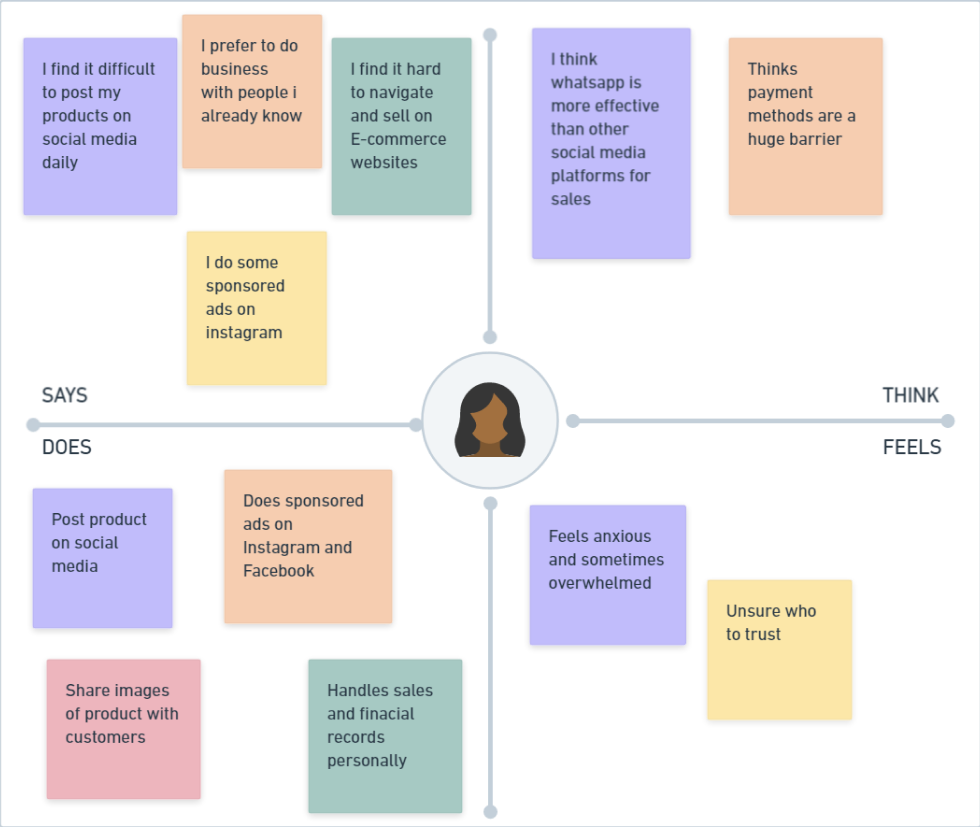
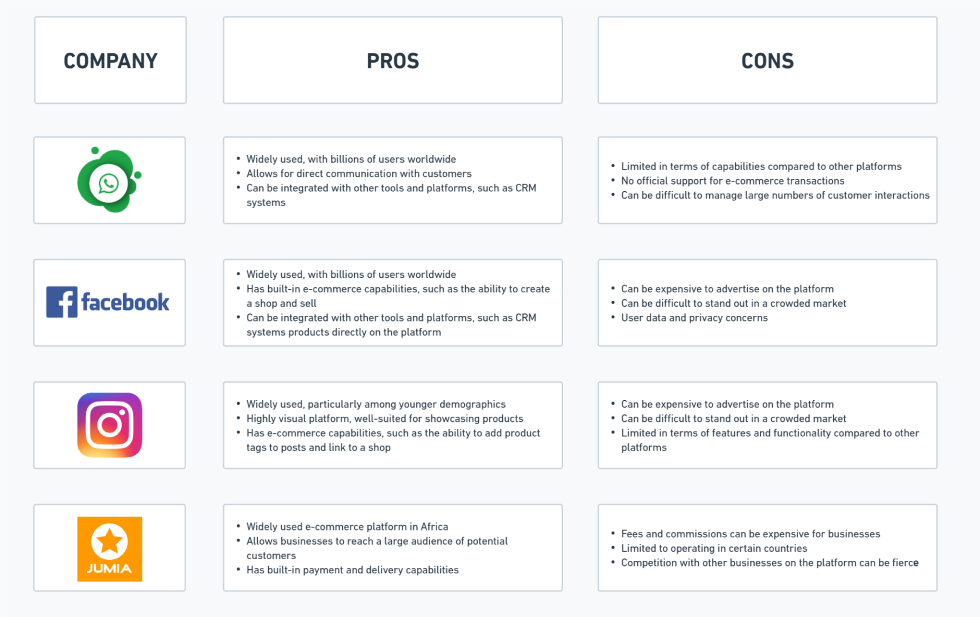
By collecting data from user interviews and surveys, my team and I were able to use a user persona, empathy map and a competitors analysis to identify and understand the pain points and challenges experienced by the users;
user persona
empathy map
competitors analysis
product vision and solution
- Design the platform to be user-friendly and provide a social media-like experience for users.
- Design the platform to function as an online store that allows users to easily create and sell products without the need to navigate the complexities of a traditional e-commerce website
- We want users to have the ability to create and manage their own website and products.
- To be able to monitor and manage financial information We want users to be able to understand their target audience and how to effectively reach them
mvp
- Create a product : We want users to be able to create products of their goods easily on the platform thereby getting all their products on a single storefront website
- Sell and share products: We want users to be able to sell products and share their links to customers using different means to gain a large audience.
- Receive payment : We want users to be able to receive payment in different currencies and crypto on the platform in order to reduce payment barriers.
information architecture
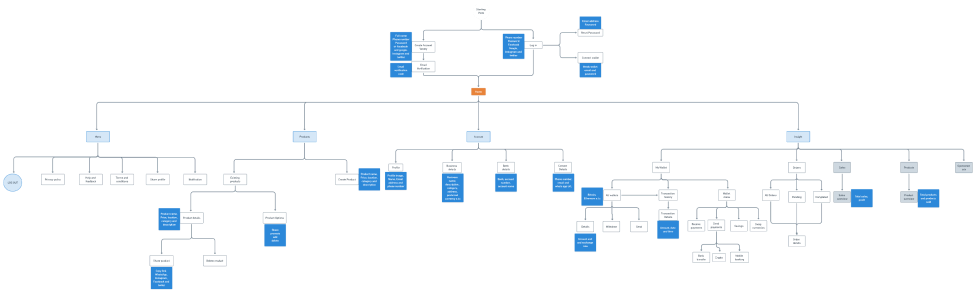
design
Throughout the project, we conducted user testing at every stage to identify and address any problems or issues with the current version. After gathering feedback, we would update the prototypes and test again. In terms of branding, we aimed to design a minimalist, clean user interface that conveyed a sense of trustworthiness and forward-thinking for our target audience.
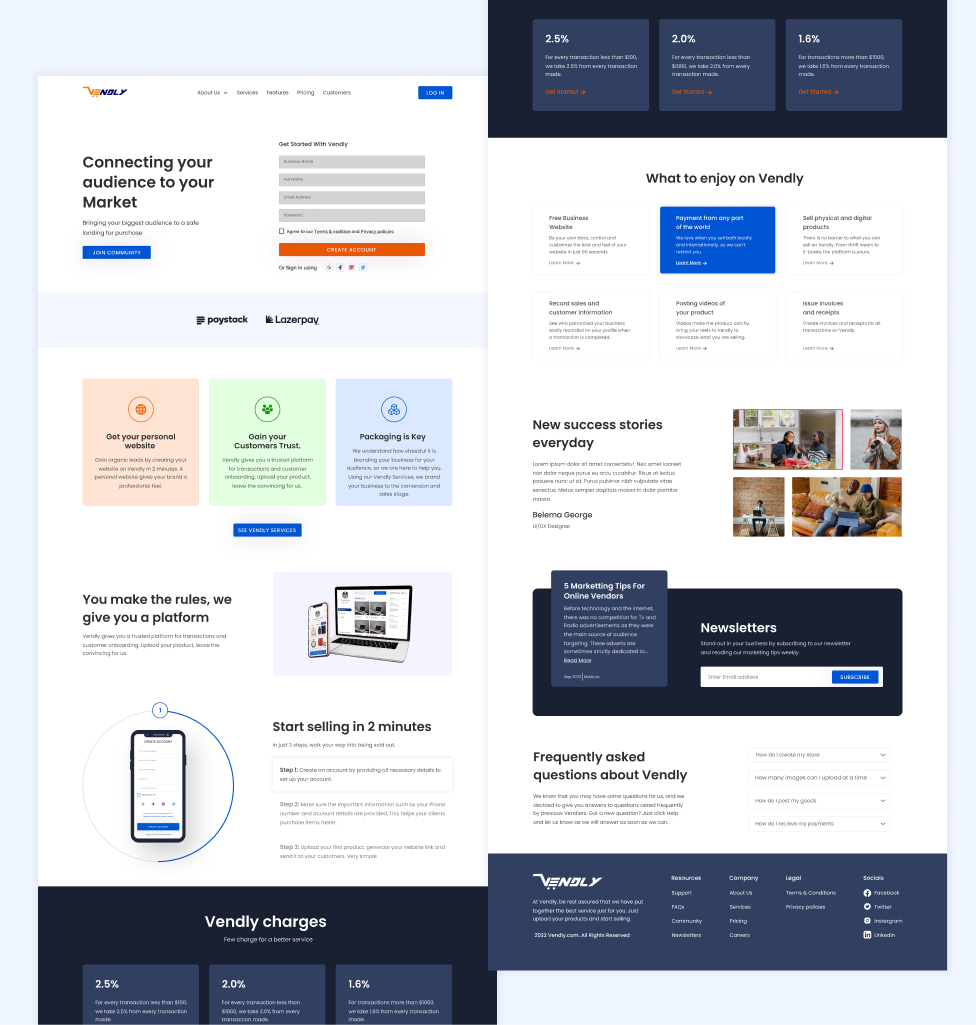
landing page
I desired a landing page with a straightforward call-to-action that clearly communicates our goal and includes all other relevant information provided by the platform
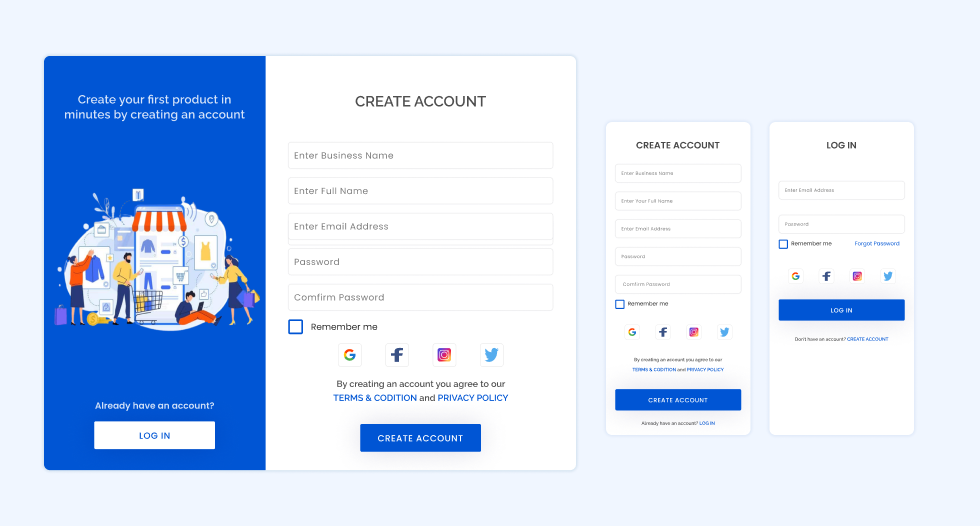
sign up pages
A streamlined registration page that enables users to either sign in or create a new account using their email, LinkedIn, or Google credentials.
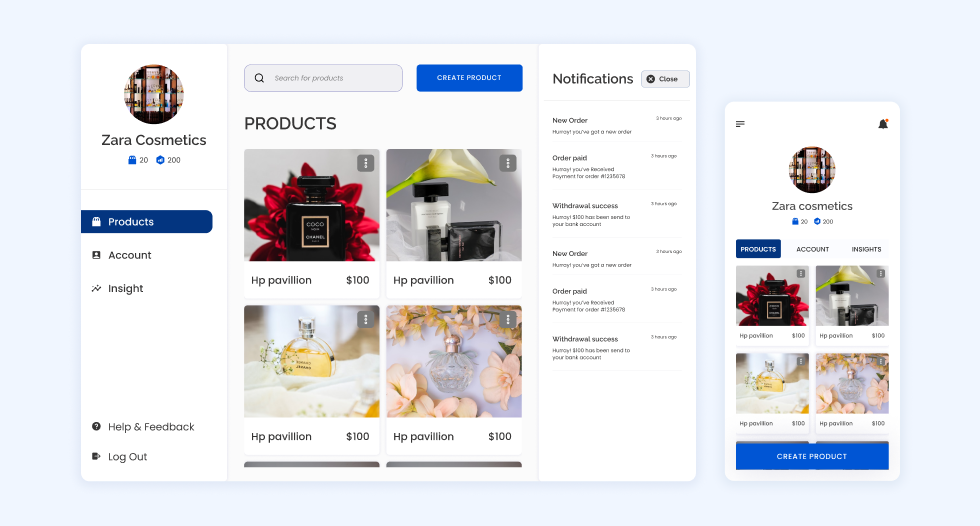
home page
The home page displays all products created by the seller and provides a menu for managing them, including a call-to-action button to create new projects.
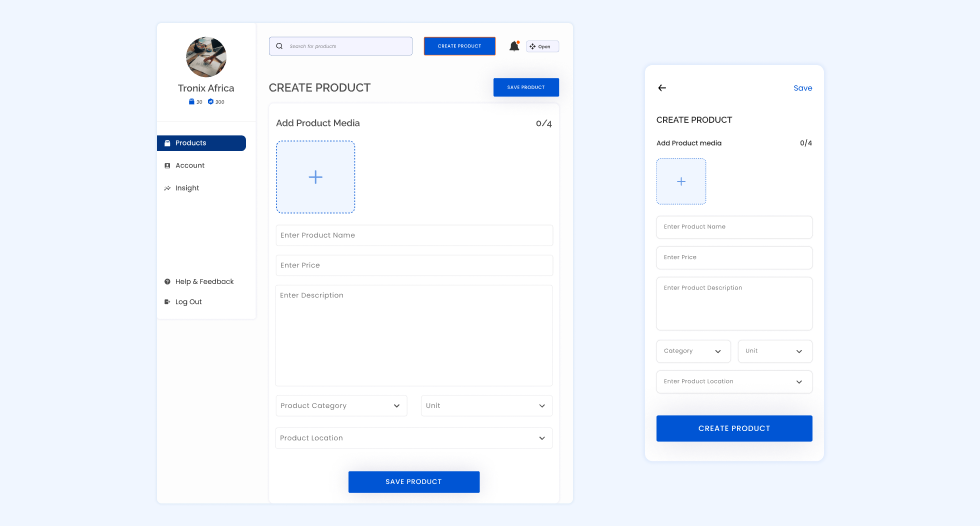
create product
This illustrates a step-by-step method for creating a new product.
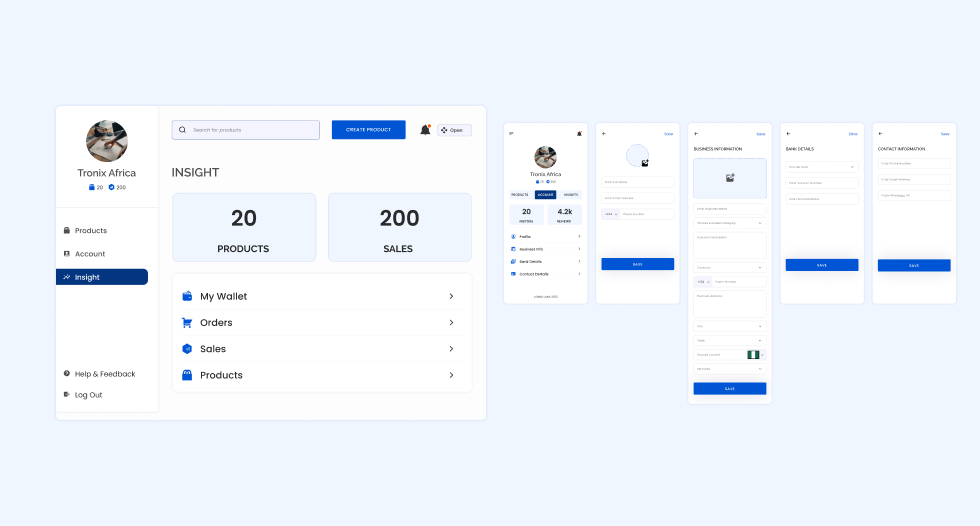
account
The account section displays detailed information about the seller and their business, which the buyer can review before making a purchase.
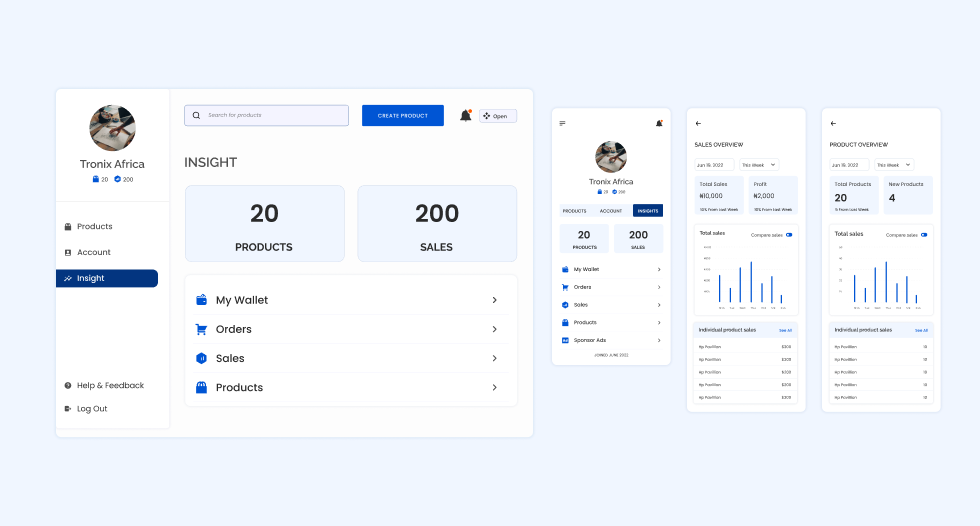
insight
Insight provides an overall view of the business performance, as well as specific information on how individual products are performing.
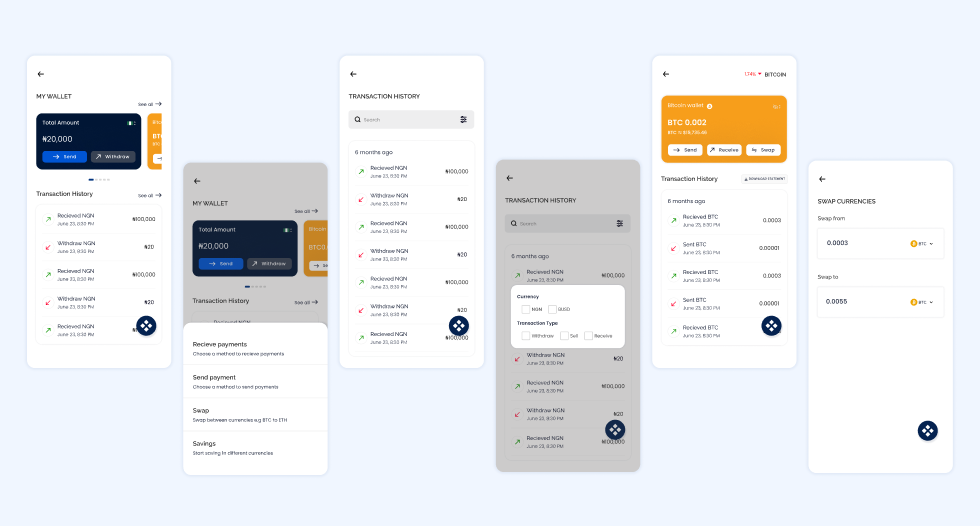
wallet
The wallet feature is the financial management area of the platform, it displays sales, profit/loss, savings, and cryptocurrency finances. It also allows the seller to effectively manage their financial records, and sell or exchange various currencies.
result and takeaways
Working at an early-stage startup was a very steep learning curve. It was an enlightening experience that taught me a lot about the importance of being efficient and strategic in terms of where to focus my energy and efforts.
some key takeaways from this project are:
- Prioritize building a minimal viable product (MVP). As a startup, it is essential to be mindful of limited time and resources, so it is important to focus on the features that will provide the most value to users.
- Do not get too caught up in the details. Earlier on, I made the mistake of focusing too much on the appearance of the user interface. However, reevaluating the user flows helped me to refocus on the user experience.
- Keep the problem you are trying to solve for your users in mind. Ultimately, your goal is to address the pains and challenges of your users, so it is important to stay focused on that, even when you are busy with daily tasks.